Press the brake pedal at highway speed and feel a pulse through it, a rhythmic pushback that matches the wheel's rotation, and you have met the rotor question. Rotors are the discs the pads squeeze, and when they wear thin, score deeply, or develop uneven thickness, the choice arrives: machine them back to smooth, or replace them. In Shelby, that choice has a seasonal rhythm, because Piedmont weather and driving patterns decide when rotor problems show themselves and when it is smartest to handle them.
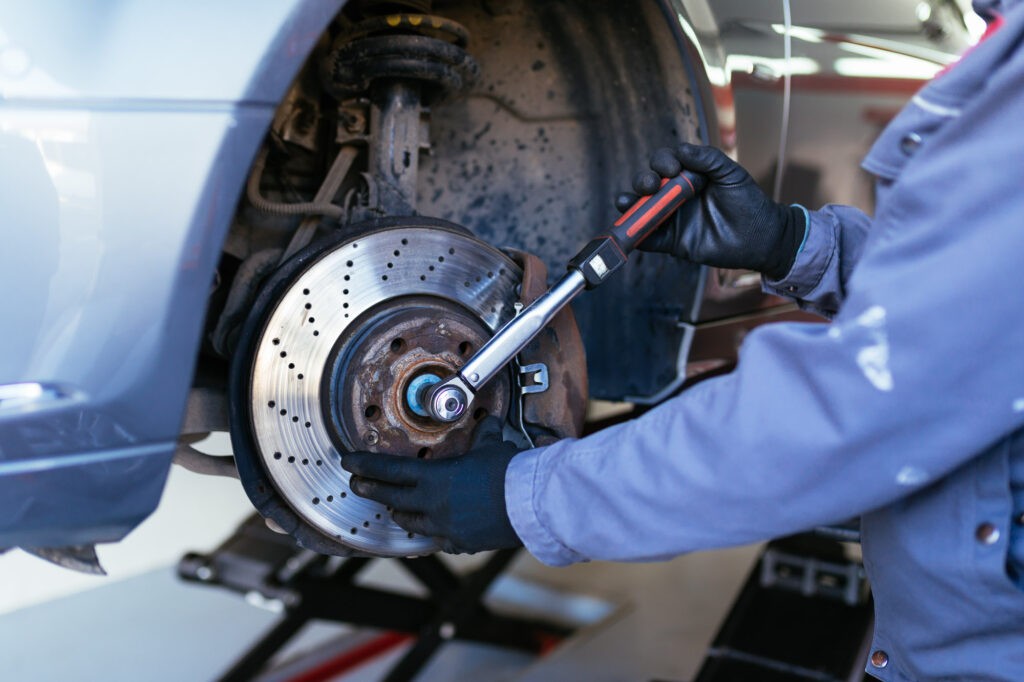
Every rotor has a minimum thickness, stamped on the part or listed by the manufacturer. That number is the law of the decision. A rotor can only be resurfaced if enough material remains afterward to stay safely above the minimum, with room for future wear.
The pulsation test, honestly read
Pulsation in the pedal usually means disc thickness variation: high and low spots around the rotor that push the pads in and out as it turns. Drivers call it warping, and true heat warping happens, but uneven pad deposits and corrosion patterns cause the same feel. Resurfacing removes the variation and the deposits in one cut, restoring a flat, clean face. If the rotor is already near minimum thickness from years of wear, that cut would leave it too thin, and replacement is the only correct answer.
Thickness is not the only disqualifier. Deep scoring, cracks, heavy rust pitting from a car that sat, and hard spots from overheating all argue for new rotors, because machining cannot restore metal that is damaged through its structure rather than just its surface.
Seasons in the Piedmont, rotor edition
Summer sends Shelby drivers toward the mountains and the coast, and long descents are where thin or uneven rotors complain loudest, as heat builds and pulsation grows. Handling a known pedal pulse in spring, before the trips, is the calm version of the job. Fall brings inspection season, when rotors get measured anyway, and wet leaves and early frosts make honest brakes worth more than usual.
Winter is the quiet season for rotor wear but the loud one for corrosion noise: a car parked outside through wet weeks grows a rust film that scrapes for the first stops of the day. That film is normal and clears itself. Pitting that survives regular driving is not normal, and it eats pads while it lasts.
The resurface-or-replace check
- Measure rotor thickness and compare it with the stamped minimum, allowing for wear after machining
- Check for pedal pulsation on a firm stop from highway speed, noting whether it is pedal, seat, or steering wheel
- Inspect both faces for deep scoring, cracks, hard spots, or rust pitting that a cut cannot clean up
- Price the machining honestly against replacement, including how much rotor life is left afterward
- Plan pads with rotors: new pads on a resurfaced or new rotor, bedded in together, as a matched set
- Schedule before summer trips if any symptom is present, rather than after the first mountain descent
The economics without numbers
Resurfacing costs less per rotor today and buys less life, because the rotor continues from its current thickness. Replacement costs more today and resets the clock fully. On a young rotor with a deposit problem, machining is the smart money. On an older rotor near minimum, machining is money spent to arrive at replacement sooner, with thin rotors that also run hotter and resist fade worse in the meantime. Shops that measure first, like Andy's Muffler & Brake does in its brake service, will show you the micrometer reading and let the number make the argument.
Runout matters too, and it is the measurement most drivers have never heard named. A rotor mounted slightly off true, from rust or debris on the hub face, wobbles as it turns and wears unevenly even if it started flat, which is why careful shops clean the hub and check runout with a dial indicator after mounting. Skipping that step can resurrect a pulsation on brand-new parts.
One more timing note: rotors and pads wear as a system. Replacing one without judging the other usually means doing the labor twice. A seasonal look, spring or fall, that measures pads and rotors together is the cheapest version of brake care there is, because it converts surprises into appointments.
Common questions
Does a pulsing pedal always mean warped rotors?
Not exactly. Uneven thickness from pad deposits or corrosion feels the same as warping. The fix is similar, but measurement decides whether resurfacing can correct it.
Can any rotor be resurfaced?
No. If machining would leave the rotor at or below its minimum thickness, or if it is cracked or deeply pitted, replacement is the only safe option.
Should rotors be done in pairs?
Yes, rotors are serviced per axle, both sides together, so braking stays balanced left to right and the pads bed evenly.
Photos in this guide are representative stock images.
← All guides from Andy's Muffler & Brake← Back to Andy's Muffler & Brake