Inspection day in North Carolina has a way of separating garage folklore from what an inspector actually checks. Around Shelby, the same handful of exhaust and brake claims circulate every year, some true, some half true, and a few that send people spending on the wrong repair before their appointment. This piece sorts the common ones for drivers heading to a station like Andy's Muffler & Brake, which performs NC state inspections alongside its muffler and brake work.
North Carolina runs both a safety inspection and, in many counties, an emissions inspection tied to the vehicle's onboard diagnostics. Exhaust and brakes sit squarely in the safety half: the inspector checks that the system is intact and not leaking, and that the brakes stop the car properly with components in serviceable condition.
The claims, sorted
| Claim | Verdict | The real story |
|---|---|---|
| A loud muffler automatically fails | It depends | Volume alone is not the test; leaks, missing parts, and a system that is not intact are what fail cars |
| Surface rust on the exhaust means failure | False | Rust on outer surfaces is cosmetic until it perforates; holes and leaks are the failure, not color |
| Squealing brakes always fail inspection | False | Noise is not a measured item; pad thickness, rotor condition, and stopping performance are |
| Thin brake pads fail even if the car stops fine | True | Pads worn to their minimum are a safety failure on condition, regardless of how the pedal feels |
| A check engine light fails the safety inspection | It depends | The light matters for emissions testing in emissions counties; the safety check is a separate list |
| One small exhaust leak can be ignored for inspection | False | Leaks in the system are a listed safety concern; inspectors check for them directly |
What inspectors actually look at on exhaust
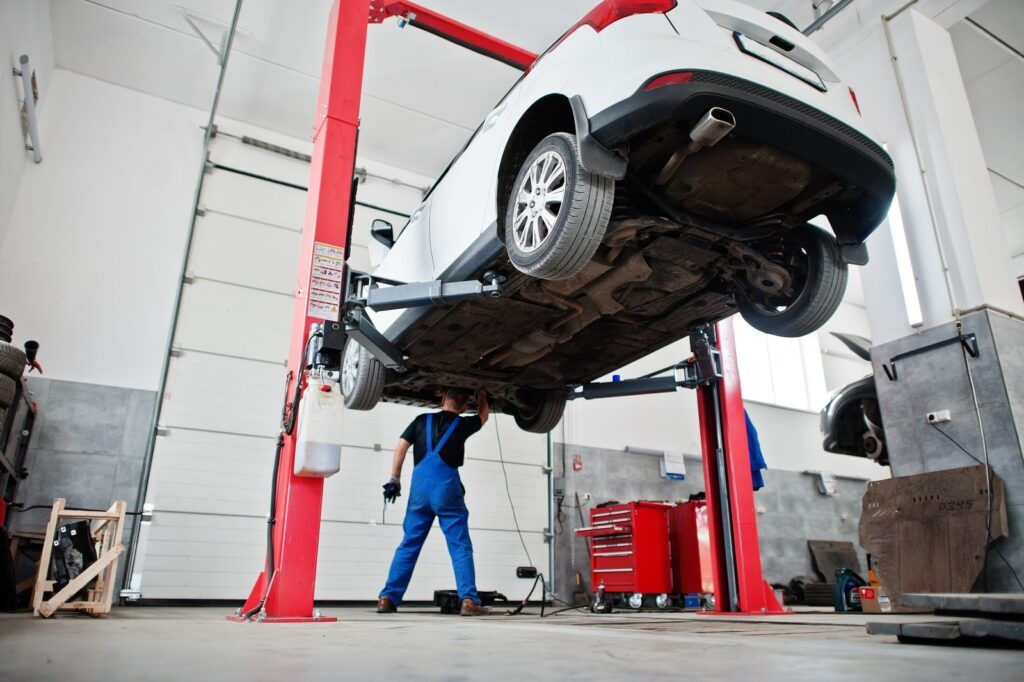
The safety inspection treats the exhaust as a system that must be present, mounted, and not leaking. A missing muffler, a pipe hanging on wire, or a leak that lets fumes out under the cabin are failures. The inspector is not grading tone or volume, and a performance muffler that is intact and sealed is generally not the problem people expect it to be.
Catalytic converters matter here as well. Federal and state rules require the converter to be present, and a car that arrives with it removed or hollowed will not pass, apart from the emissions consequences. That is one reason converter theft, covered elsewhere in this series, creates an inspection problem on top of a repair bill.
What inspectors actually look at on brakes
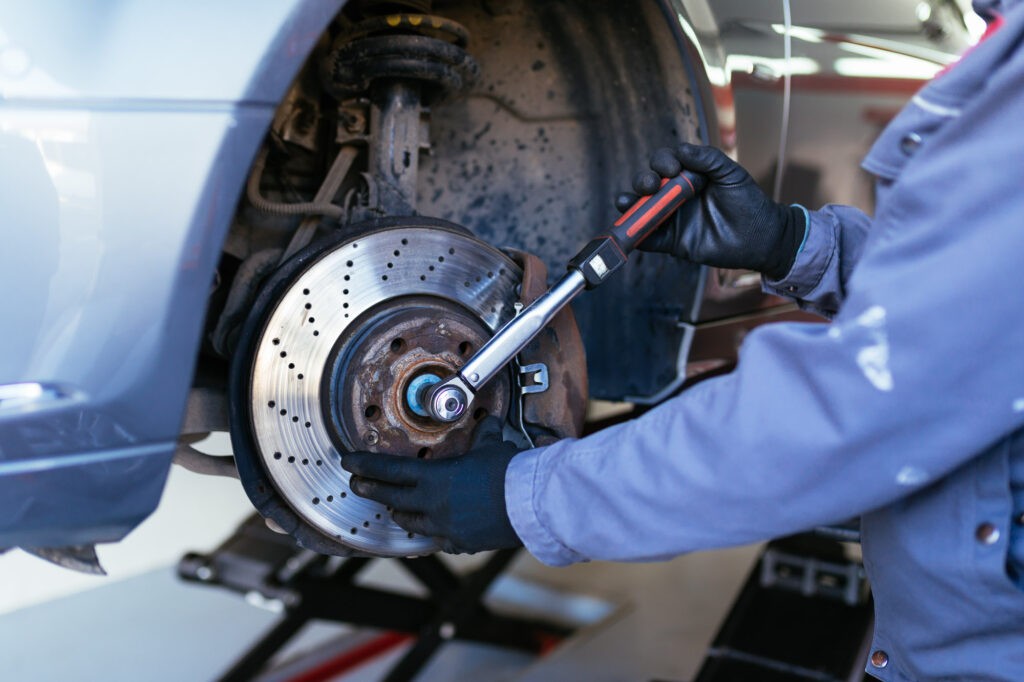
Brake checks cover condition and function: pads and shoes with usable material, rotors and drums within limits, lines and hoses sound, no leaks, and a pedal that holds. A soft pedal, a pull to one side, or visible fluid at a wheel tells the inspector the system needs work before it needs a sticker.
The gap between folklore and practice cuts both ways. Drivers fear failing for noise and get surprised by condition items, while truly worn parts get defended with but it stops fine. Stopping fine today, with pads at their limit, means stopping worse every week from now on, in the rain, on a hill, with a load. The inspection is a snapshot of that trend, and it is meant to catch the car before the trend does.
Walking in ready
The cheapest inspection is the one preceded by a driveway check: listen for exhaust leaks on a cold start, look for hanging pipes or heavy soot at joints, note any brake pull or pedal change, and check pad thickness if your wheels let you see it. Anything questionable is cheaper to address on your schedule than on a failed sticker's deadline, when the reinspection clock is running. Most exhaust and brake failures are not surprises to anyone who has been paying attention; they are only surprises to people who believed the folklore instead.
Common questions
Can my car fail inspection for a loud exhaust if nothing leaks?
Volume by itself is not the usual failure. Inspectors fail systems that leak, are missing parts, or are not securely mounted, so an intact performance muffler is rarely the issue.
Do worn brake pads fail even if the car stops well?
Yes. Pads at or below their minimum thickness fail on condition, because the inspection judges the state of the parts, not just one stop from the driver's seat.
Should I repair a known exhaust leak before inspection?
Yes. A leak is a direct safety-inspection item, and fixing it beforehand avoids a failed sticker and a return trip on a deadline.
Photos in this guide are representative stock images.
← All guides from Andy's Muffler & Brake← Back to Andy's Muffler & Brake