There is a small honeycomb of ceramic or metal inside a steel shell under your car, coated with platinum, palladium, and rhodium, and it quietly turns the worst of your exhaust into less harmful gases. That is the catalytic converter. It is also, for the same reason it works, one of the most stolen parts in America: the metals inside it are valuable, and the part sits exposed under the vehicle where a thief with a battery saw can reach it in minutes.
Understanding what the converter does, why it is targeted, and what your protection options are helps Shelby drivers make calm decisions instead of headline-driven ones. The choices differ for a truck parked outside overnight, a sedan in a garage, and a car that has already been hit once.
What the converter actually does
Exhaust leaves the engine carrying carbon monoxide, unburned hydrocarbons, and nitrogen oxides. Inside the converter, the precious-metal coating triggers reactions that convert those into carbon dioxide, water vapor, and nitrogen. The honeycomb shape exists to give the exhaust maximum contact with the coating in minimum space. Converters need heat to work, which is why they sit close to the engine and why short trips are hard on them.
A healthy converter is silent and invisible in daily driving. A failing one announces itself with a rotten-egg smell from sulfur compounds, a rattling from broken honeycomb, reduced power when the substrate clogs, or a check engine light reporting efficiency below threshold.
Why thieves want it, and the sound of a missing one
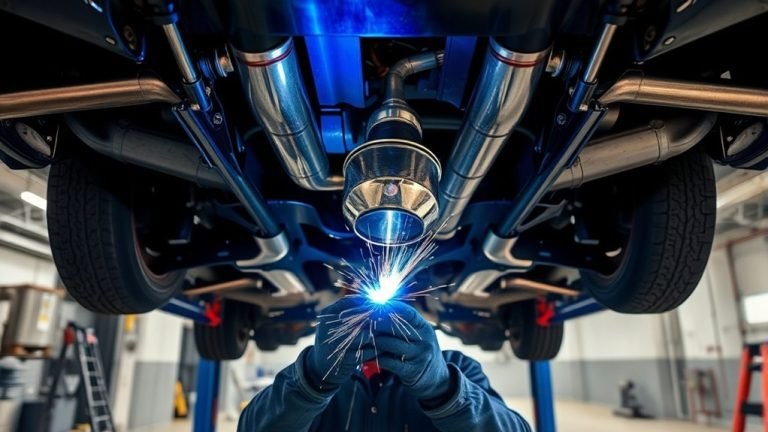
The theft math is simple and ugly: high metal value, easy access on vehicles with ground clearance, and a cut that takes very little time. Trucks and SUVs are targeted most because a thief can slide under without a jack. Hybrids are also prized because their converters see less engine wear and their metals stay richer.
You will know immediately if yours is taken. Starting the car produces an unmuffled roar from underneath, because the exhaust now exits mid-system with nothing behind the cut but open pipe. The car is loud, the fumes smell raw, and it should not be driven more than necessary: it will not pass inspection, it may trigger warning lights, and the open exhaust under the cabin is a fume risk.
Choosing protection, by situation
| Your situation | Sensible option | Trade-off |
|---|---|---|
| Truck or SUV parked outdoors overnight | Steel shield or cage over the converter | Adds a real time barrier; costs a part and install time, and must not block service access |
| Car garaged most nights | Lighting, parking awareness, no shield | Risk is already low; spend attention rather than hardware |
| Converter stolen once already | Shield plus marking and recording serial details | Repeat targeting happens; marking helps recovery and proof |
| High-clearance work vehicle | Shield and consider an alarm with tilt or vibration sensing | Layers buy time and noise, which is what actually deters |
| Older car near end of life | Marking and insurance check | Hardware may outvalue the car; know your coverage before deciding |
If it happens to you
File a police report, call your insurer before authorizing work, and have the car inspected for collateral damage, since thieves often cut or nick oxygen sensor wiring and nearby lines. Replacement converters must meet emissions requirements, and the choice between original-equipment and compliant aftermarket units is a conversation to have with the shop about your vehicle and how long you plan to keep it. At Andy's Muffler & Brake, catalytic converter replacement is a listed service, and the underbody look-over that comes with it is part of doing the job right.
Prevention is imperfect and worth it anyway. Anything that adds minutes and noise to the cut changes the thief's calculation, because the whole appeal of the crime is speed. A shield on a high, outdoor-parked truck is the highest-value move on the table; everything else is layering.
Etching or marking the converter with your vehicle's identification details is the cheapest layer of all. Marked converters are harder to sell and easier to trace, and some communities and shops run marking events for exactly that reason. It takes minutes, it does not affect how the car runs, and it pairs well with the simple habit of parking in light and in view whenever the truck cannot be garaged.
Common questions
Why is my catalytic converter worth stealing?
It contains platinum, palladium, and rhodium, metals with real scrap value, and it sits exposed under the car where it can be cut out quickly.
What does a car sound like with the converter stolen?
Extremely loud, with an open roar from underneath from the moment it starts. The exhaust is exiting mid-system, so there is no mistaking it.
Can I drive until the replacement arrives?
Only as little as possible. The car will be loud, will not pass inspection, and the open exhaust can let fumes reach the cabin, so treat it as parked until repaired.
Photos in this guide are representative stock images.
← All guides from Andy's Muffler & Brake← Back to Andy's Muffler & Brake