That first light squeal when you brake into a parking space is not your car failing. It is your car reporting. Most brake pads carry a small metal tab called a wear indicator, positioned to touch the rotor when the pad material wears down to its replacement point. The tab is designed to squeal. Engineers built the noise in on purpose, because a sound you cannot ignore beats a warning you never get.
Knowing what the squeal means, and what the rest of the brake calendar looks like across a Shelby year, turns brake care from a surprise bill into a scheduled errand. Pads are a wear item like tires and wiper blades, and they behave on a timeline you can plan around.
How pads wear, and what the materials mean
Pad material trades grip, noise, dust, and rotor wear against each other. Organic pads are quiet and gentle but wear faster. Semi-metallic pads handle heat well and last, at the cost of more noise and dust. Ceramic pads run quiet and clean with stable performance, which is why they are common on daily drivers. None is best in the abstract; the right pad matches the car and its use.
Wear speed depends on driving more than mileage charts admit. Hills, towing, stop-and-go commuting, and a habit of late braking all consume pads faster. Around Cleveland County, a driver crossing town in traffic all week and a driver on open highway can own identical cars with pad lives years apart.
A brake year, season by season
| When | What happens or what to do | Why |
|---|---|---|
| Spring | Listen after winter; note any new squeal or grinding; wash road grit from wheels | Winter grit and moisture leave rotors rusty and pads glazed; early noises are information |
| Early summer | Measure pad thickness before vacation and mountain driving | Long descents heat brakes; thin pads fade fastest exactly when you need them most |
| Mid-summer | After any brake work, follow bedding-in: moderate stops to seat new pads evenly | Proper bedding transfers an even layer to the rotor and prevents later pulsation |
| Fall | Check pads before inspection season and wet-weather months | Worn pads plus wet roads lengthen stops; the inspection will measure them anyway |
| Winter | Gentle first stops after wet or icy nights to clear rust film from rotors | A light rust film forms overnight and causes a brief scrape until it wears off |
Bedding-in, and why new pads can feel odd
New pads need a short courtship with the rotors. A series of moderate stops from moderate speed deposits an even transfer layer of pad material onto the rotor surface, and braking actually happens against that layer. Skip the process with immediate hard stops and the layer deposits unevenly, which can set up a pulsation that feels like a warped rotor weeks later. Any shop, including Andy's Muffler & Brake with brake service on its board, beds pads as part of the job or tells you the simple version to do yourself.
Squeal, scrape, grind: the three sounds ranked
Checking pads without taking anything apart
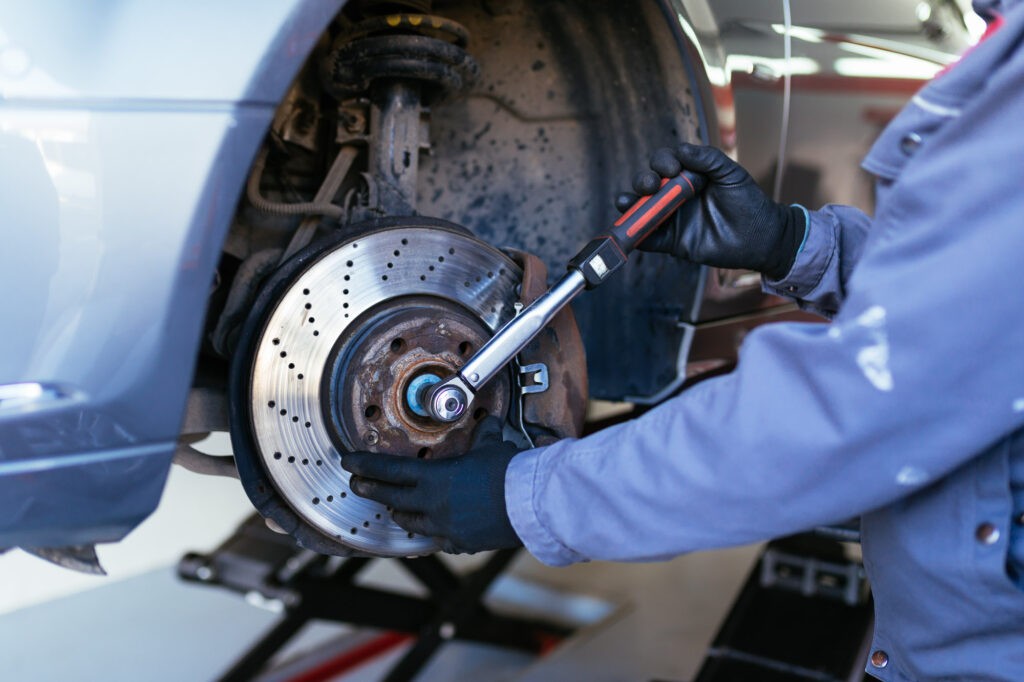
On many cars you can see the outer pad through the wheel spokes, and a flashlight tells the story: healthy pad material is visibly thick, worn material is a sliver against the steel backing plate. You are comparing pad to the plate it sits on; when the friction material is about as thin as the plate is thick, the appointment should already be made. The inner pad is harder to see and sometimes wears faster, which is why a shop checks both with the wheel off rather than trusting the view through the spokes.
A light squeal under gentle braking is the wear indicator, and it means schedule pads soon, in weeks not months. A scraping or chirping that comes and goes can be a bent indicator, a pebble, or glazing, worth a look but rarely urgent. Grinding is metal on metal: the pad material is gone and the backing plate is machining your rotor with every stop. Grinding converts a pad job into a pad-and-rotor job, and every mile adds to it. The squeal is a feature. The grind is the invoice for ignoring it.
Common questions
Is the squealing sound really made on purpose?
Yes. The wear indicator is a small metal tab set to contact the rotor when pad material reaches its replacement thickness, creating a squeal you are meant to hear and act on.
How long can I drive after the squeal starts?
Plan on weeks, not months, and less if you drive hills or heavy traffic. The indicator speaks up while there is still some material left, but that margin is not storage.
Do ceramic pads stop the squealing?
Ceramic pads are generally quieter in normal use, but the wear indicator will still squeal when they reach their limit. That noise is the design working, whatever the material.
Photos in this guide are representative stock images.
← All guides from Andy's Muffler & Brake← Back to Andy's Muffler & Brake